Biological Waste Management

Laboratories can produce several types and streams of biological wastes, including Regulated Medical Waste (RMW). It is essential that all waste is disposed of appropriately in accordance with federal, local and Georgetown-specific regulatory standards. 

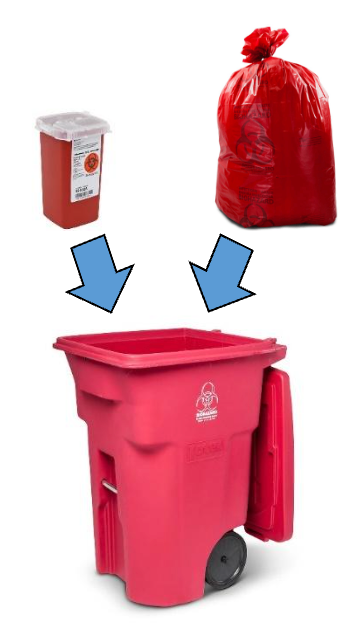
Most RMW can be disposed of by placing the bag or sharps container into one of the biowaste toters that are located in autoclave rooms throughout the research facilities. This waste must be placed in a red or orange bag, labeled with a biohazard symbol. Furthermore, it is imperative that the bag is secured at the top and does not have any holes or projections that will cause imminent puncture. The waste areas will be routinely checked and toters will be replaced as necessary; if all toters in your area are full, return your waste to secondary containment and contact us for assistance.

Pathological waste is typically processed by Division of Comparative Medicine (DCM) staff following disposal by the researchers.

Regulated Medical Waste (RMW): Encompasses a range of waste materials generated in healthcare facilities and research laboratories. Includes waste that may pose a risk of infection or injury to workers or the public.Examples: Contaminated materials, Used PPE, Blood saturated items, Cultures and stocks, Sharps enclosed in a sharp container
Pathological Waste: This specifically refers to waste materials derived from human or animal tissues, organs, and body parts.Examples: Surgical specimens, Excised tissue & organs

Waste generated from procedures involving BSL-1 materials can be properly disinfected and disposed of as regulated trash, per industry standards. These materials are not considered “biohazardous” as they are not known to cause disease in healthy adults. 

BSL-2 waste is considered biohazardous and is treated as RMW, includes:  

  • Cultures and stocks of biological materials: Discarded cultures, stocks, specimens, and associated items likely to contain agents that are likely to be pathogenic to healthy humans; discarded etiologic agents; wastes from the production of biological materials; and antibiotics likely to have been contaminated by agents that are likely to be pathogenic to healthy humans. 
  • Human Materials: Wastes consisting of human blood or human body fluids or items contaminated with human blood or human body fluids; all human anatomical wastes and all wastes that are human tissues, organs, or body parts. 
  • Sharps:  Sharps likely to be contaminated with agents that are pathogenic to healthy humans; all needles, syringes with attached needles, suture needles, and scalpels, including all sharps generated through veterinary practice. 
  • Animal carcasses, body parts, bedding, and related wastes: Animal carcasses, body parts, bedding, and all other wastes likely to have been contaminated as a result of animals being intentionally infected with agents likely to be pathogenic to healthy humans. 
  • Contaminated soil, water or other debris: Any residue or contaminated soil, water, or other debris resulting from the cleanup of a spill of any RMW.
  • Contaminated solid waste: Any solid waste contaminated by or mixed with RMW (including animal bedding from ABSL-2 facilities).

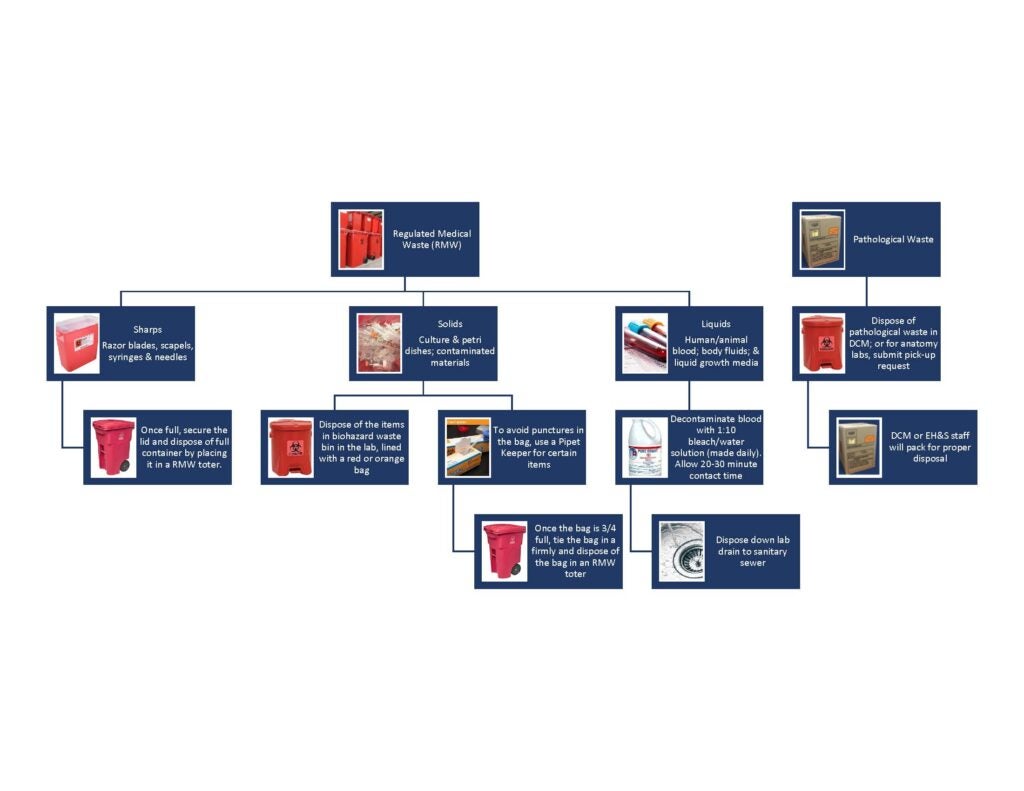
Laboratories that generate RMW must ensure wastes are properly stored and transported. Biohazardous waste containers must be constructed to be puncture and leak-resistant; each container should be equipped with closable lids, which must remain closed unless being actively filled with waste; and these containers must be lined with proper biohazard waste bags. Once the bag reaches approximately three-quarters full, it should be promptly replaced to prevent overfilling and ensure safe handling. 

Sharps are objects with sharp points or edges capable of puncturing or cutting the skin. Due to the potential contamination with infectious agents, safe disposal in a designated sharps container is required. These containers should be filled no more than two-thirds full before being closed and locked. Once locked, these containers are considered hazardous waste and should be disposed of.

Pathological waste, such as animal carcasses or large amounts of tissue, must be disposed of as a separate stream of RMW. All laboratories that generate pathological waste must transport their wastes to the Division of Comparative Medicine (DCM) facility for proper disposal. 

Laboratories dispose of regulated medical waste, including sharps, at allocated waste areas, typically located in autoclave rooms. Waste materials should be transported on a cart to facilitate safe and efficient disposal. Please note, this disposal method does not include pathological waste; animal carcasses and large amounts of tissue is disposed of through the DCM.
Biohazardous liquid waste generated in laboratory activities, such as microbial cultures, supernatant from centrifuged samples, media used for growing microorganisms, and any liquid contaminated with biological materials must be treated with an appropriate chemical disinfectant prior to disposal. This disinfection step is crucial for inactivating or destroying any viable pathogens present in the waste. Selecting the appropriate chemical disinfectant depends on the specific pathogens and materials involved. Laboratories should follow established protocols and use disinfectants recommended for the types of organisms being handled.

Most of liquid biohazardous waste at Georgetown can be inactivated with bleach solution. The bleach solution should be prepared daily; and the final concentration of bleach should be 10% in liquid waste. After treating the liquid waste with bleach, allow a contact time of 20-30 minutes to ensure sufficient time for the bleach to inactivate any viable pathogens present in the waste. Once the appropriate contact time has elapsed, the liquid waste can be safely poured down the laboratory drain with copious amounts of water. 10% bleach is the only disinfectant that can be disposed of down the drain. Disinfectant solutions not authorized for sewer disposal may be collected as hazardous waste. 

Please refer to the Biological Safety Manual for more information about proper disinfectant solutions.

Applicable Policies & Guides: